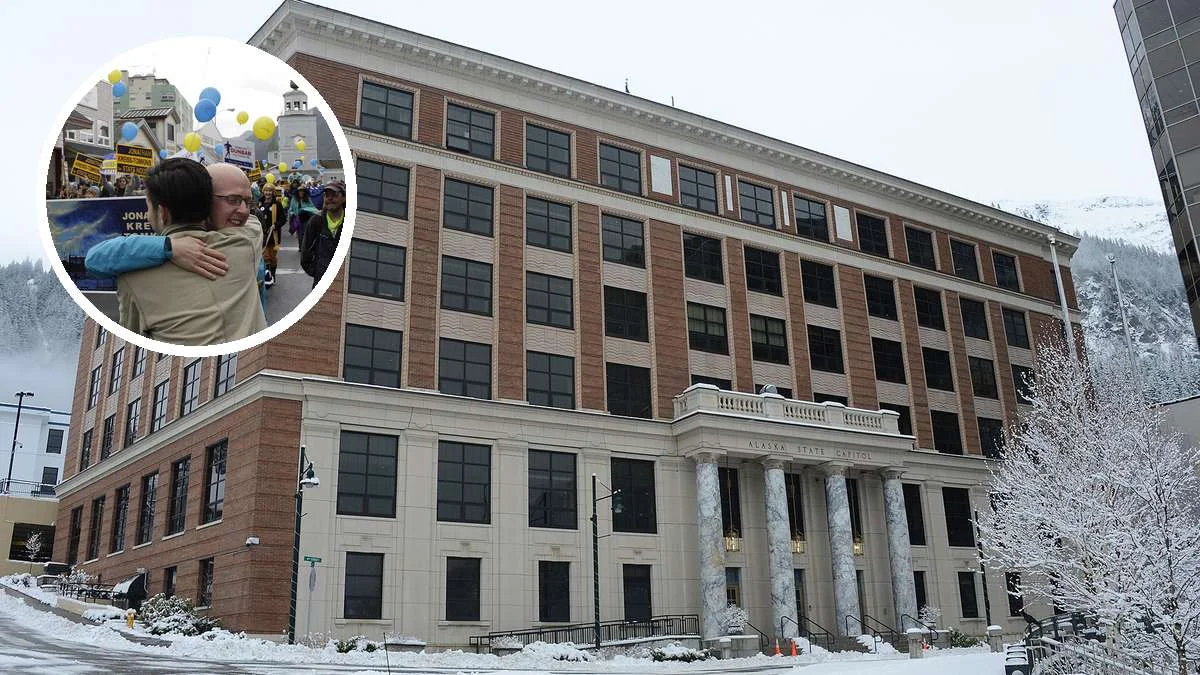
Democrat Jonathan Kreiss-Tomkins has won the race for Alaska governor, the first Democrat elected to the job since 1998, CBS News and the Associated Press report. The AP called the race on Friday, Nov. 13, ten days after polls closed. Kreiss-Tomkins, who goes by JKT, defeated three Republicans, one of them endorsed by President Trump.
He is 37 and left the state House three years ago. His campaign centered on affordability, full funding for public schools and making all oil and gas producers pay corporate income tax. He also asked for a pause on new data centers until lawmakers write rules for them. The Guardian reports he cleared 50% of first-choice votes, so Alaska’s ranked-choice system never had to count second choices for this race.
The win puts Democrats in 30 governor’s offices, according to both outlets, after flips in Iowa, Georgia, Ohio and Texas. The Guardian adds Nevada and Kansas to the list of Democratic gubernatorial wins this month.
How long is 28 years without a Democrat?
By our count, 1998 to 2026 is 28 years, which means every Alaska governor elected since the late 1990s has been a Republican or an independent. Outgoing Republican Gov. Mike Dunleavy has served eight years. Kreiss-Tomkins called the state “broken” under that tenure and pointed to a ferry system with routes cut drastically, a problem for southeast communities that have no road connection and limited air service.
His coalition was not purely partisan. Republican U.S. Sen. Lisa Murkowski endorsed him a week before the election, and so did three former governors: Democrat Tony Knowles, independent Bill Walker and Republican Frank Murkowski, the senator’s father. He said his campaign had more than 10,000 donors, and he has promised a Cabinet that mixes Republicans, Democrats and independents.
| Date | What happened | Source |
|---|---|---|
| Nov. 3 | Election Day; polls close | Guardian |
| Nov. 13 (Friday) | AP calls the governor’s race for Kreiss-Tomkins, who declares victory | CBS/AP, Guardian |
| Overnight into Nov. 14 | AP also calls the ballot measure to repeal ranked-choice voting and top-four primaries: it fails | NPR |
| Nov. 14 (Saturday) | Democrat Mary Peltola leads Republican Sen. Dan Sullivan in the Senate race with few ballots left, per Alaska Public Media | Guardian |
Did ranked-choice voting matter here?
Not for the governor’s race, going by the Guardian’s account. Alaska’s system sends the top four primary finishers to the general election and uses ranked choices only if nobody gets a majority. NPR reports that voters rejected a repeal of that system for the second time, after a narrow failure in 2024. The Senate race is the one likely to go to a ranked-choice count, and NPR notes it includes two candidates named Dan Sullivan, an independent and the Republican incumbent.
Thirty of 50 governorships is 60%, a figure we calculated from the 30 that both outlets report.