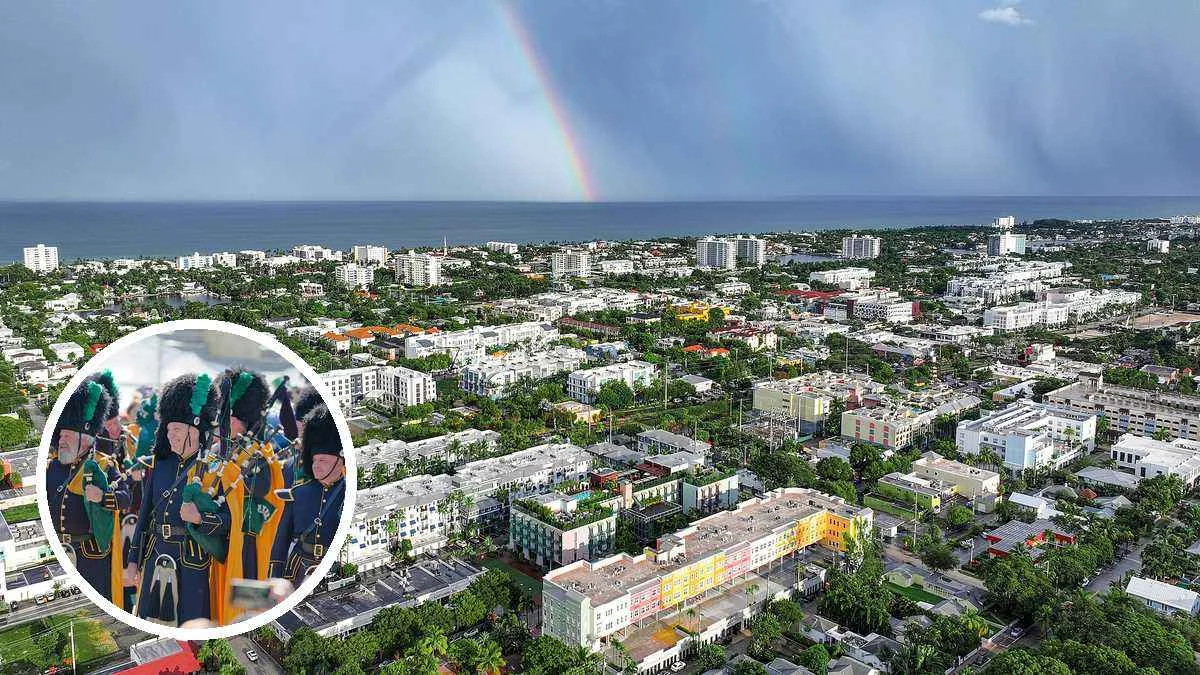
The city of Delray Beach, Florida, has dropped its St. Patrick’s Day parade and its Pride sponsorship for 2027, saying a new state law bars it from running them, NPR reported on Nov. 14. Gov. Ron DeSantis answered on X that the city is “engaging in ‘malicious compliance.’”
The parade has run every year since 1970. The law, SB 1134, takes effect Jan. 1, 2027, and the city attorney told Mayor Tom Carney that any government-sponsored celebration of culture, ethnicity or heritage that is not a national holiday could break it. Carney, a Republican, said he decided to cancel rather than risk it.
DeSantis disagrees with that reading. “What they are doing is not mandated by Florida law,” he wrote, calling the cancellation a political stunt. Carney told NPR the city attorney “came up with a different conclusion” and left it there.
What does the bill actually say?
The Florida Senate’s official records confirm that CS/CS/SB 1134 became law in April 2026 and takes effect January 1, 2027. It prohibits cities and counties from funding, promoting or taking official action related to activities covered by its definition of diversity, equity and inclusion.
Officials who violate the provisions are deemed to have committed misfeasance or malfeasance in office. The law also allows residents to sue local governments, with courts authorized to award damages, costs and other relief.
However, it includes exceptions for certain federal and state holidays and observances, as well as provisions allowing municipalities to issue event permits in a content-neutral manner and provide public safety services. Those exceptions leave room for privately organized celebrations, although DeSantis and Delray Beach officials disagree over whether the city itself must withdraw from the events.
CBS12 reported that the restrictions cover programs designed with reference to ethnicity, sexual orientation or gender identity. Delray Beach was involved in 21 annual events in 2025, according to that report, so the city had to decide where the line sits. It picked two events. The law applies to every Florida city and county.
| Date | What happened |
|---|---|
| April 2025 | City discusses revising its special event policy and dropping that year’s Pride Festival (CBS12) |
| Nov. 10, 2026 | City announces it cannot organize, fund or promote the events in 2027 (CBS12, WLRN) |
| Nov. 11, 2026 | Carney says he has asked private backers to take over the parade (WPTV) |
| Nov. 14, 2026 | NPR reports DeSantis’s “malicious compliance” post and Carney’s response |
| Jan. 1, 2027 | SB 1134 takes effect |
Can the parade still happen?
Carney says yes, with private money. The parade was privately run until about eight years ago, he told NPR, and his own family helped keep it going in the 1980s and 1990s. He told WPTV that he contacted about half a dozen people and that more reached out to offer to underwrite it. People have already submitted applications to run it, he said, and he is confident it will go on as scheduled in 2027.
The city said it was hearing from angry residents. Carney said about 50 emails had arrived asking what the city was doing. He said a similar private arrangement could be considered for Pride, and that he would support it if the private sector wants to. No finalized plan for either event has been announced.
The mayor’s argument and the governor’s argument now sit side by side. Carney says the law is risky enough that a lawyer advised against the events. DeSantis says it does not require the cancellation. Neither has pointed to a court ruling or state guidance that settles it, and we did not find one.